Every plank is sawn and carried, every loaf baked and every tool knapped, cast or forged. What the colony makes, keeps and trades decides how it lives.
Every room laid out by hand.
Everything you build takes up its real space: a bed is a metre wide and two long, a smokehouse three by three. Press R to turn a piece before you place it, and the placement says how long your quickest builder will take.
The build menu holds every piece in fourteen tabs with one search box: "planks" finds the sawbench. Room plans lay a whole bedroom, workshop, hut or cottage in one click, every wall, door, floor and piece, and clear what stands in the way. Everything wears, about two seasons in the open and a year under a roof, and below 70% a repair order goes up. Small pieces, from a bed to a sawbench, can be moved whole, and Shift-click gathers several so Link can copy one's settings to the rest.
Five at work along the palisade in a northern January.
Stool1 × 1
Bed1 × 2
Dining table2 × 1
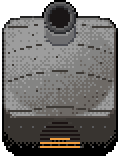
Furnace2 × 2
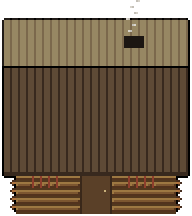
Smokehouse3 × 3
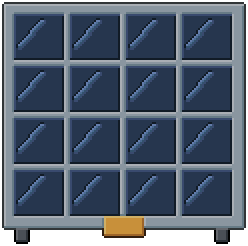
Solar panel4 × 4
Six ages, each a whole game.
Research climbs from stone to bronze, iron, steel and industry, and at last to the landing ship's own manuals. Each age brings its own tools, buildings and trades, sets the colony aims of its own and has a great work to raise. Most of an age's aims open the next keystone, and every age after the Stone age goes at half pace without the School. A colony may stay in any of them for good.
Stone
From the landing
Knapped stone and bone, hide tents, pots from the kiln, the bow and the sling, ale and mead.
Bronze
Bronze casting, 3 days
Copper, tin and gold smelted, bronze cast into tools and bells, glass, books, wine and the first armour. Cattle and donkeys come to the pens.
Iron
Ironworking, 10 days, on 3 of Bronze's 4 aims
The anvil and the bloomery, iron tools and ploughs, the iron stove, the water mill, carts and horses.
Steel
Steelmaking, 12 days, on 4 of Iron's 5 aims
The best tools, steel arms and mail, the crossbow, the trip hammer and the strongroom.
Industrial
Engineering, 7 days, on 2 of Steel's 3 aims
The river generator, steam engine and windmill, electric light, the radio, freezers, the cannery, the lathe and the power loom. Never a start.
Salvage
The ship's manuals, 6 days, on 2 of Industrial's 3 aims
Power cells, the fusion cell, climate control, the medical scanner and the dimensional store. Never a start.
Tools wear out.
Every hour of work wears the tool in hand: stone lasts days of work, steel months. Outgrown tools go to the caravans first. When a tool breaks the work goes on bare-handed, slower, until another is knapped, cast or forged. Building goes by skill, not by tool.
Bare hands
0.5
Knapped stone
0.6
Bronze
0.8
Iron
1.05
Steel
1.2
Powered
2.4
Coal, copper and tin, cleared and worked by the miners.
Seams found by digging.
Hidden until struck
Nothing shows until someone tunnels into a seam, but a stained face hints at one. Every seam before the Industrial age lies inside the first claim, and Prospect Here sends someone who quarries to read a marked face within an hour or two.
Cleared, then worked
A struck seam is cleared cell by cell. A mine head on the cleared floor, one for every six cells, digs ore for as long as the colony stands.
A company of miners
A band digs a struck seam at half pace until a miners' company holds it through its mining post. The smiths turn the ore into bars.
Water wheels.
A water mill on the river grinds flour with nobody at the stones, and a trip hammer beside it forges three times as fast as an anvil. In the Iron age the cart carries more and the bloomery makes blooms for the first real industry.
The water mill and the trip hammer, side by side on the river.
A furnace needs a tender for the whole run, and the run stands still while nobody tends it.
So do the kilns, the charcoal kiln, the bloomery and the steel stations: an industry you can see eating your people's hours. Linen takes sixteen hours at the loom, a hide soaks three days, and milling, tanning and butchering by hand are slow. Steel comes from the cementation furnace and, with Engineering, the converter. Clothes wear through in the wearing and are replaced from store, so the slow goods stay wanted.
A store room gone dark in a hard frost, the river frozen.
One pool of power.
The river generator, the steam engine, the windmill, solar panels and the fusion cell all feed the same pool, with no wires to lay.
Cells store what is left over, and when the pool runs short the lowest priority goes dark first. A powered station works three or four times as fast as its hand rung and draws a tenth while nobody works it, a powered tool doubles a steel one, and heaters and coolers draw in full only while their air asks. A river generator stops if the river freezes, so a cold country wants a second source.
Porridge at the fireplace, soup in the cauldron, stew on the stove, ale at the bar. What the colony grows, keeps and brews decides what it eats.
Barley
Cabbage
Pumpkin
Tomato
Pepper
Apple
Grapes
Hops
Cabbages, potatoes and carrots under glass in a northern January.
Fields that remember
Pick a crop under Create Farmland and drag over the land. A harvest draws on the soil, beans and peas give some back, and the same crop twice breeds disease, so the growers plan each field's next crop themselves. Winter wheat, rye and garlic go in in autumn and ripen in early summer.
The ice house and the root cellar in the woods.
Kept through the winter
Stored food counts as fresh days and preserved days, each with a target of its own, and RESOURCES names the narrowest step. Roots keep for months in the root cellar, and the ice house keeps everything at 1 °C with ice cut from a frozen lake. Salt keeps fish and meat for four months. Cheese, hams, wine and spirits age a step every five to twenty days by kind, and the caravan pays by the quality.
A rainy evening at the bar of the tavern.
The brewery and the tavern
Wild brew at any cooking fire, ale, mead and cider from the Stone age, wine from the Bronze, spirits from the Iron, and small beer for the morning cups. Grain is malted, mashed in the vat and fermented in the barrel. A roofed room with a bar counter and seats is a tavern, where a drink in company does more.
A harvest is only the start: food has to reach storage before a cook can use it. A stockpile cell holds one kind, shelves and crates hold mixed goods, and a store's Storage tab sets what it takes.
››Wheat to breadA millstone grinds wheat into flour, and a bread oven bakes two loaves from each.
››From the huntMeat and fish keep only days, until a drying rack or a smokehouse makes them keep for good.
›Milk to cheeseA cheese press makes two cheeses from four milk, each a step better every ten days it ages.
››Hide to leatherA tanning rack tans hides from the hunt, and a tailor's bench sews gloves, boots and coats.
››Copper and tin to bronzeTwo copper and one tin smelt into three bronze, and the casting bench casts tools and bells.
›››Grain to aleMalt, the brewing vat and a cask turn grain into ale, and hops make it keep four months.
Three towns beyond the map edge send caravans, travellers and requests, and a pedlar walks the road between them. Their goods, and what the colony raises for itself, give the surplus somewhere to go.
The Saltmere caravan, camped by the trading post.
The caravan
A colony meets its first trader after day 30. Lindhaven comes in spring, Saltmere in midsummer and Northmere in autumn, each camping by the trading post for two days, and from mid-April to October a pedlar stops for a day every ten to fifteen days. Once the Market stands, sell them the surplus for coin, priced by what they want and by your good name, and buy warm clothes, glass, salt, books, animals and now and then a manual. Residents shop too, with coin of their own or by selling the spares they never use: a coat for the cold, a painting for their room, honey sweets or a gift for a friend. In the Bronze age, until copper is struck, every caravan brings copper or bronze bars.
The caravans come from three neighbours beyond the map edge, Lindhaven down the river, Saltmere up the coast and Northmere over the passes. Trade and requests answered warm them. A neighbour may ask for goods, for help in its hard winter, to host a guest, to borrow workers for a few days or to send some to its festival; those who agree walk off the map and come back with a trade learned or rested. The colony asks in turn from TRADE, for coin or as a favour, and may send for someone of a trade. A warm neighbour sends migrants, gifts and help when stores run low, a wary one a thinner caravan, and a travelling worker may hire on for a week at 3 coin a day.
The farmyard
Hens, geese, goats, sheep and pigs come with the caravan from the Stone age, cattle from the Bronze and horses from the Iron. Mark a pen and its fence and gate are laid; add a coop and a trough, and the herders milk, gather eggs, shear and muck out. A tribe's hurdle fence takes one log a stretch and pens goats, and a tamed boar piglet follows its tamer until a pen has room. A dog keeps at its owner's heels and barks at wolves, or sits on watch over a pen; a cat keeps the rats from a store. A herder leads an ox or a horse out to plough, and a hauler walks a team through the cart's haul.
Eggs
Milk and cheese
Wool
Honey
Both of the clinic's cots taken.
The clinic
A cold passes to roommates and carers, and two cold nights spent ill turn it to pneumonia. The sick keep indoors and choose a warm bed. From seventy, old age may come as frailty, which no medicine reaches. Herbs become medicine at the apothecary's table, and the healers' company room is the clinic. Pneumonia, infection and a rabid animal's bite kill if nobody tends them, and a countdown in the letter says how long is left.
 Craft






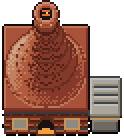 Cementation furnace
 Steel converter
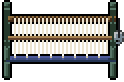 Power loom
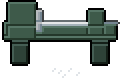 Lathe
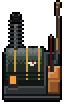 Steam engine
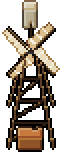 Windmill
 Barley
 Cabbage
 Pumpkin
 Tomato
 Pepper
 Apple
 Grapes
 Hops
 ›
 ›

 ›
 ›

 ›

 ›
 ›

 ›
 ›
 ›


 Eggs
 Wool
 Honey